 This post pertains to the Battle of Britain—Simple Hex Rules that appeared in Lone Warrior #175 magazine. In George Arnold’s post on the LW blog “Feedback on No. 175?” Paul Le Long wrote a comment noting how difficult it was for the British to win against the Germans with a bombing objective of 24 points. Further reflection indicated that the bombing objective should be raised to at least 36 points to be fair. I proposed play-testing the game with the new objective of 36 points—and then I added a few other changes to the test game as well.
The first change was the enlargement of the playing area by going from 2” hexes to 3” hexes on a Hotz felt mat 44” wide and 72” long (18 hexes wide and 24 hexes long). The felt mat was placed across the top of the bed in the guest room so it would not get in the way if left up overnight.
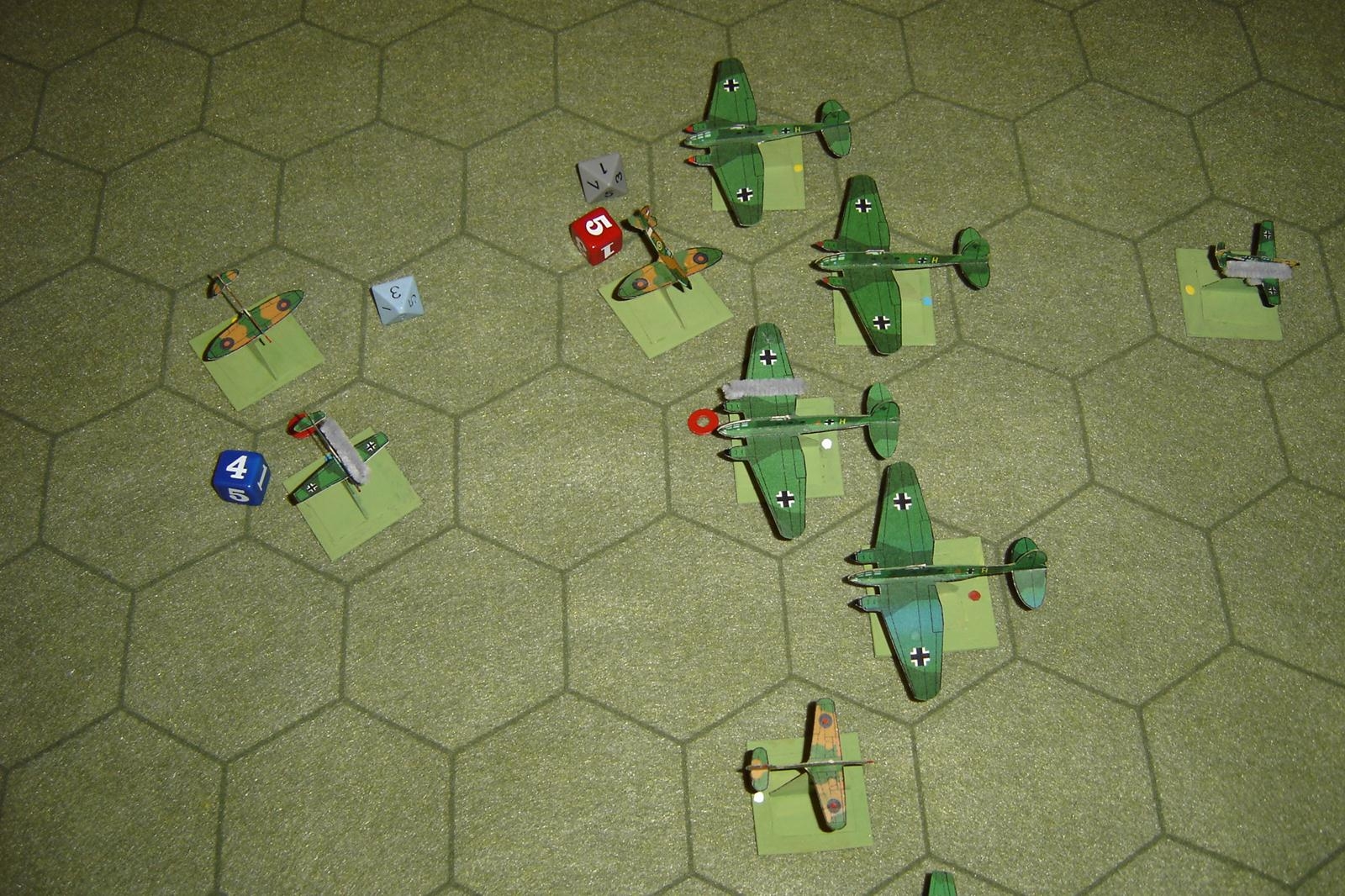
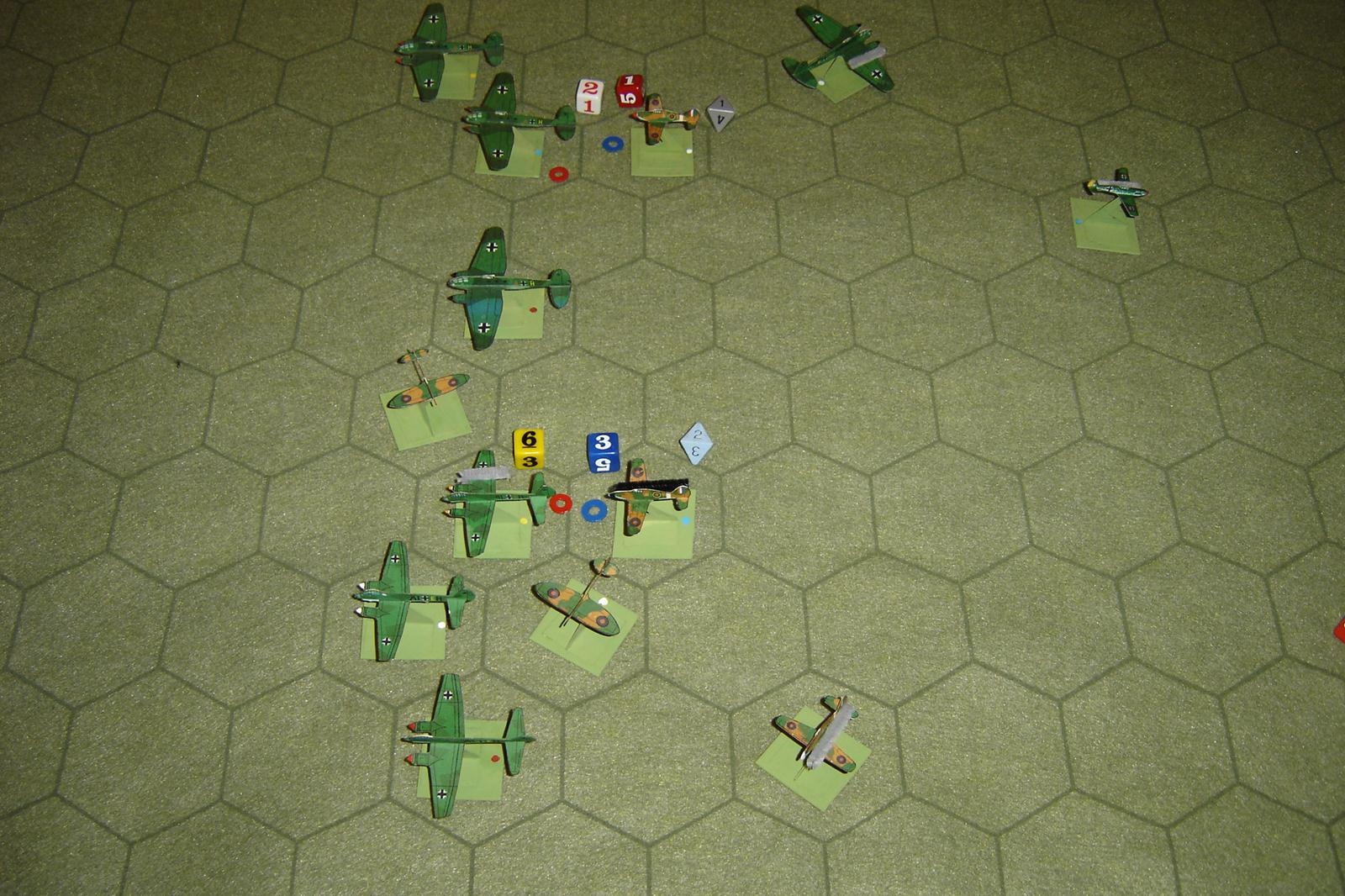
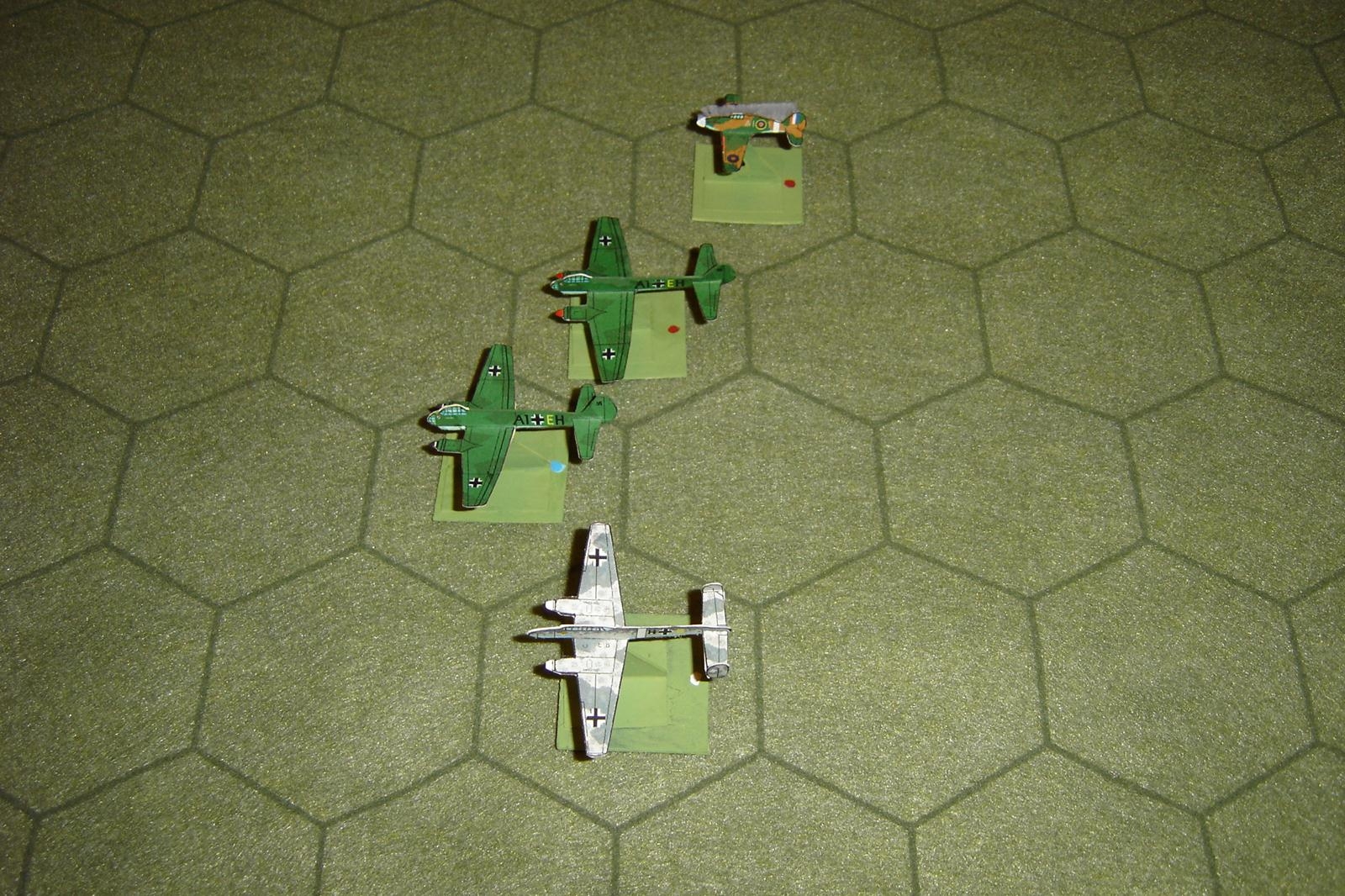
The second change replaced the paper counters with paper models used in previous Battle of Britain games appearing in Lone Warrior magazine.
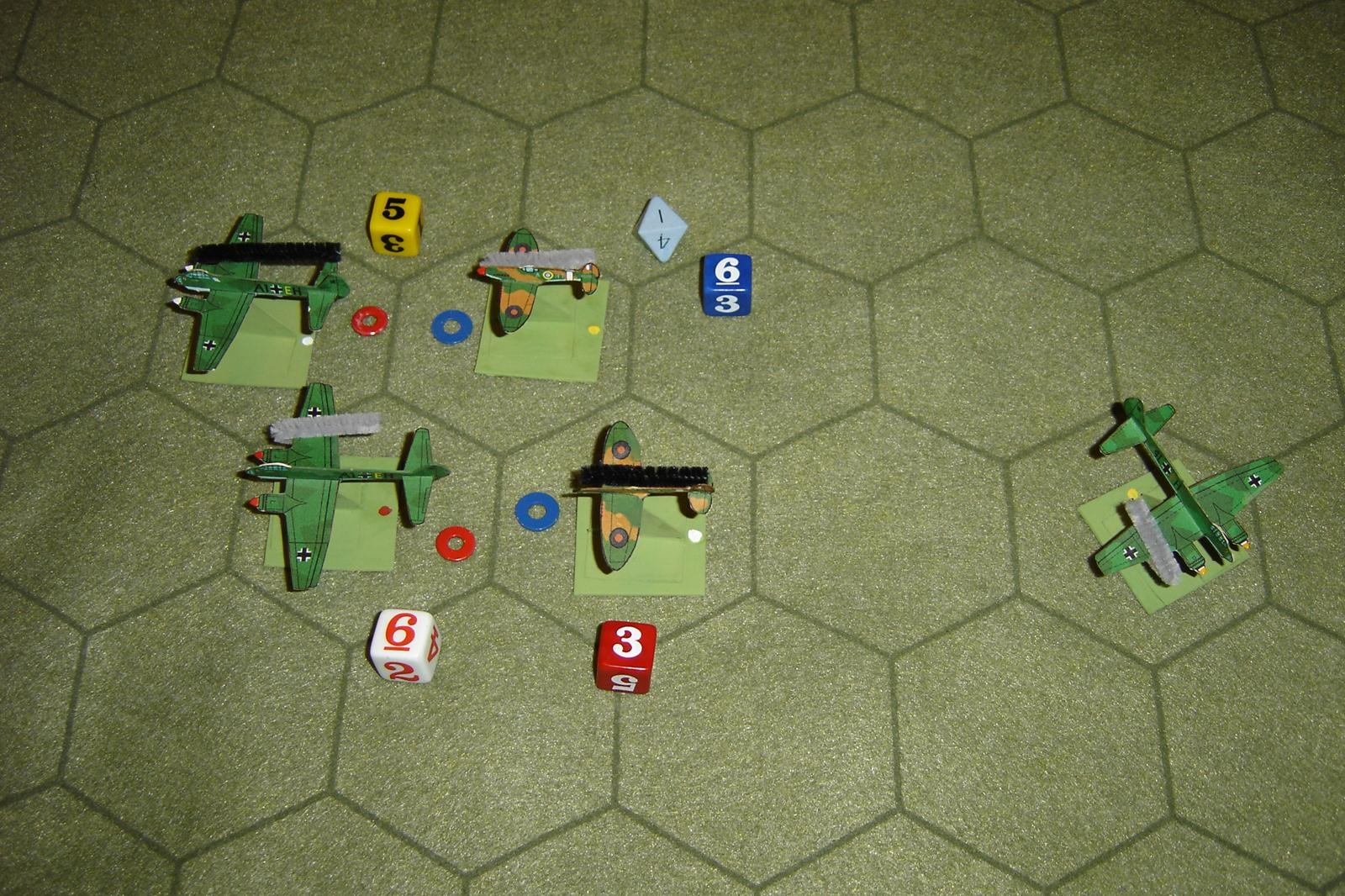
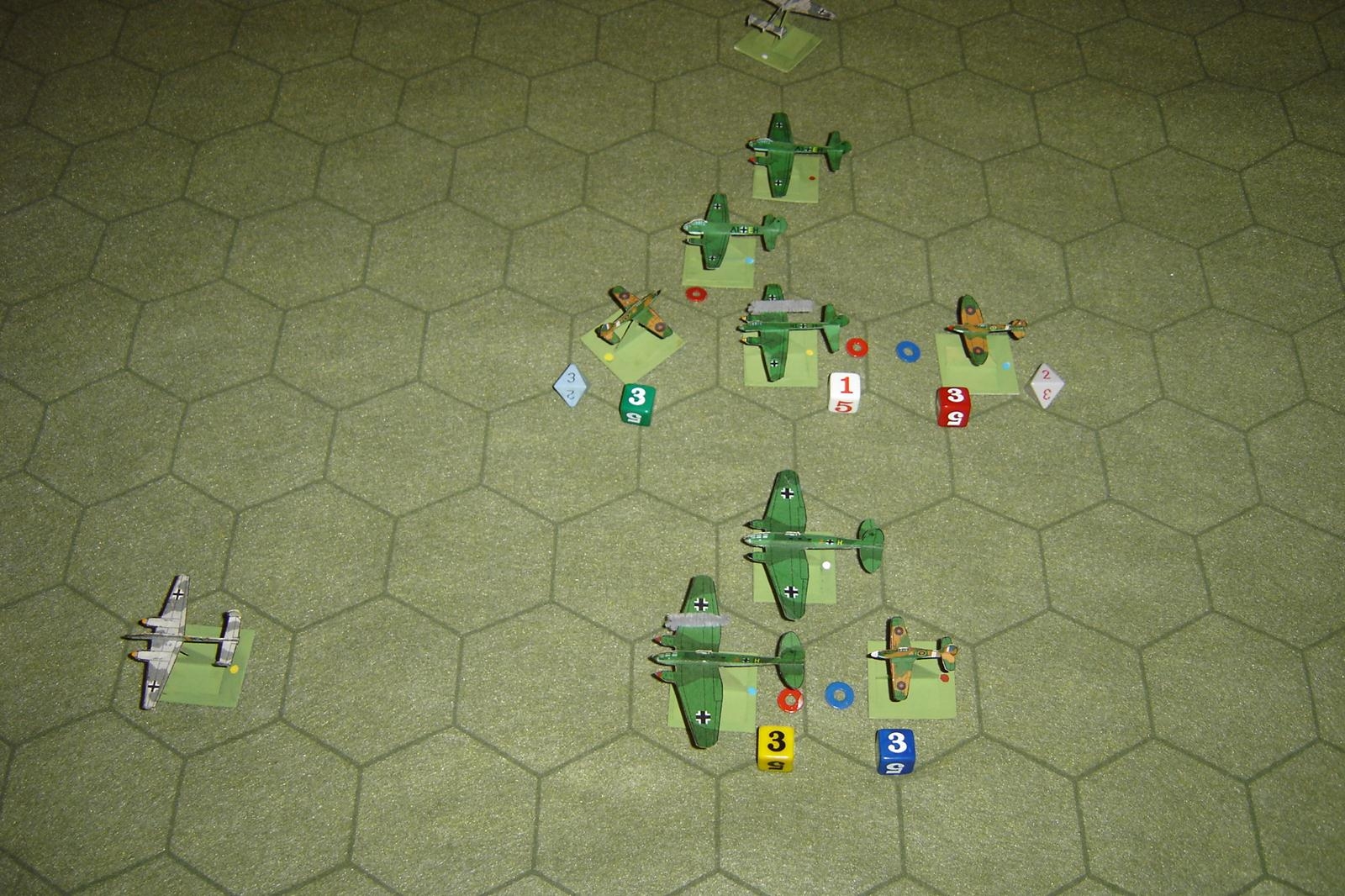
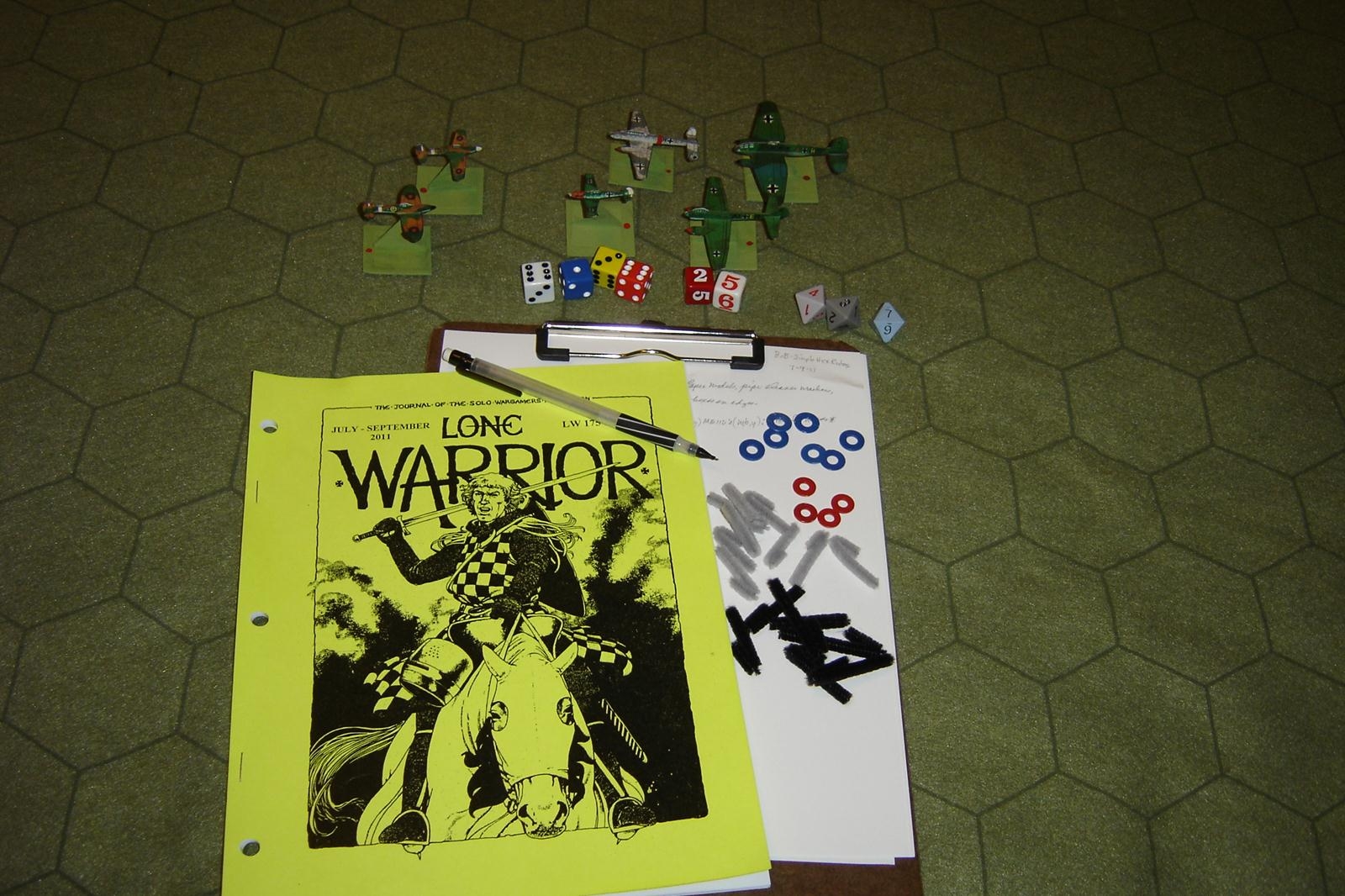
More combat dice were added so several attacks could be settled at the same time. The combat dice had Arabic numerals and the darker dice (red, blue, green) represented the attackers and the lighter dice (white, yellow) represented the defenders.
Another change was in the use of the markers (my memory aids). When an attacking aircraft came within range of a target, a red washer was placed on the target hex. If the target had a defending gunner within range, a blue washer was placed on the attacker’s hex. If the attacking plane stopped to attack before finishing all of its moves, an 8-sided die was placed in a nearby hex showing the number of moves it had remaining after combat was concluded. I was then able to move the remaining airplanes in the group before coming back to settle the combat results for all the engaged aircraft. I don’t know if it saved time, but it sure looked good in the photos. The washers and 8-sided dice were removed from the table after the results were recorded by the camera.
An additional set of markers was used to show the results of hits. If the airplane was damaged, a gray piece of pipe cleaner was hooked over the wing to represent smoke. On the next turn the damaged aircraft would cease combat and begin returning to its own edge of entry. Damaged fighters would no longer attack and damaged bombers would no longer defend as they made their way back to the repair shops. If the hit destroyed the target, a black piece of pipe cleaner was hooked over the wing and the plane was removed from the board after being recorded as destroyed.
The first German raid consisted of 11 aircraft: Me109’s (R,B,Y); He111’s (R,W,B,Y); Ju88’s (R,W,Y); Me110 (B). The first British response involved five fighters: Spitfires (W,Y); Hurricanes (R,W,B). During the first assault three German aircraft were destroyed: Me109 (R);Ju88 (W); Me110 (B). Six German aircraft were damaged: Me109’s (B,Y); He111’s (R,W); Ju88’s (R,Y). The British lost three fighters: Spitfire (W); Hurricanes (W,B). Two more were damaged: Spitfire (Y); Hurricane (R). At the end of the first foray, two He111’s (B,Y) succeeded in bombing the target for a score of 20.
The British could ill-afford to lose three of their eight fighters, not to mention the possibility of being unable to repair the two damaged craft. The German loss of three airplanes was inconsequential, but the possibility of being unable to repair all six damaged planes in time for the next raid was a matter of concern. The Brits still had a ray of hope.
Unfortunately for the British, their ray of hope was soon blotted out. The Luftwaffe was able to repair all damaged aircraft and bring them to the flight line. On the other hand, the RAF was able to repair only the Hurricane in time to be moved to the line. Things were beginning to look rather dark for the Brits.
The Germans were able to launch eight planes in the second raid, three fighters and five bombers: Me109 (R); He111’s (W,B); Ju88’s (R,B,Y); Me110’s (W,Y). The British were able to put up only three fighters against them: Spitfire (B); Hurricanes (R,Y). At this point in the game I seriously considered conceding the victory to the Germans but decided to play the game to the end. Surprisingly, the Spitfire shot the Me109 out of the sky immediately and the three British fighters found themselves with a reasonable amount of time to deal with the five German bombers. The defensive fire of the bombers and the troublesome Me110’s eventually downed two British fighters and sent the other home trailing smoke. Two Ju88’s (R,B) succeeded in making bomb runs and scored 12 points which, when added to the previous score, totaled only 32 points—not the 36 points the Germans needed to win. It had been a costly victory, but the outnumbered Brits had won the battle in this little corner of England!
My evaluation of the new 36-point bombing objective for the Germans to win is that it is a better goal than the original 24-point objective and it will be implemented in all my future BoB-SHR games. Thanks, Paul.
The photos below were taken during both raids of the game. I hope they will add a bit of visual interest to the account given above. –Mike