
by Rob Morgan
I began wargaming in the mid-1960’s, and yes that’s a very long time ago.
One of my early memories, from about 1964, was of a demo wargame I saw played on a billiard table ( that’s nine and a half by four and three quarters feet) involving a mass of largely Airfix German and British infantry and a few, a very few, of the early AFV kits they manufactured.
There were also some toy models approximating 1/72nd scale-ish.
This was an era when throwing a dice meant just that – a six-sided die, as no-one in the ‘known-to-wargamers’ world made d12’s, d20’s or any other of the odd options available now.
The participants in that Saturday afternoon game were a mixture of young reserve soldiers and students, with a few older veterans. I was just an observer and a distant one at that, but no one back in those days was a seasoned wargamer!
The memory which stays with me was that as part of the game, each side had a linear slide-rule in use.
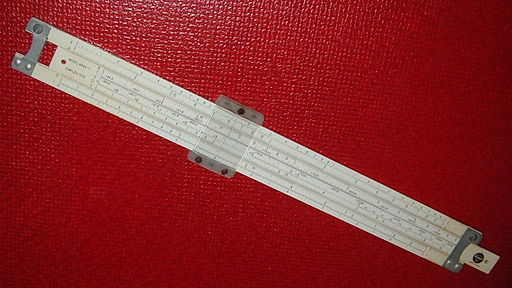
My memory is exact on that point, as they were commonplace instruments then.
However, as a slide -rule, though a simple analog computer of sorts, isn’t best used for adding and subtracting, is better for more complex calculations, I wonder what the early wargamers were using it for?
Does anyone else have a recollection of slide-rules (I understand these were known as ‘slipsticks’ in the USA) being used in wargames? Or an idea of what they were used for?
I can, just possibly, think of potential uses for them in naval wargames of the ironclad period and beyond.